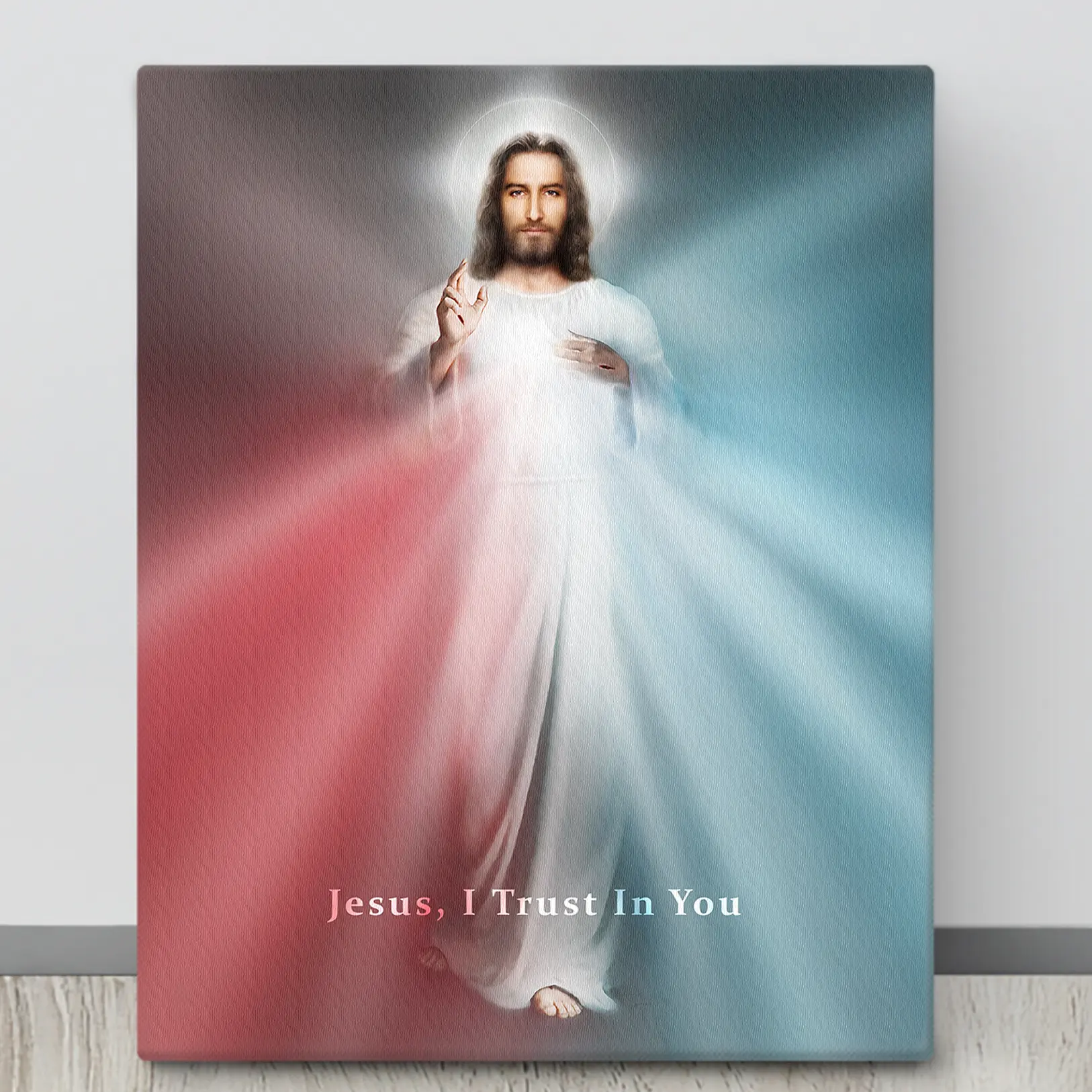





The Divine Mercy Image: A Vessel of Grace and Promise
During a vision, Jesus told Saint Faustina: "Paint an image according to the pattern you see, with the signature: Jesus, I trust in You. I promise that the soul that will venerate this image will not perish."
Learn more about the Visionary Saint Faustina
Price range: $2.50 through $25.00
Add to cart This product has multiple variants. The options may be chosen on the product pagePrice range: $3.00 through $18.00
Add to cart This product has multiple variants. The options may be chosen on the product page


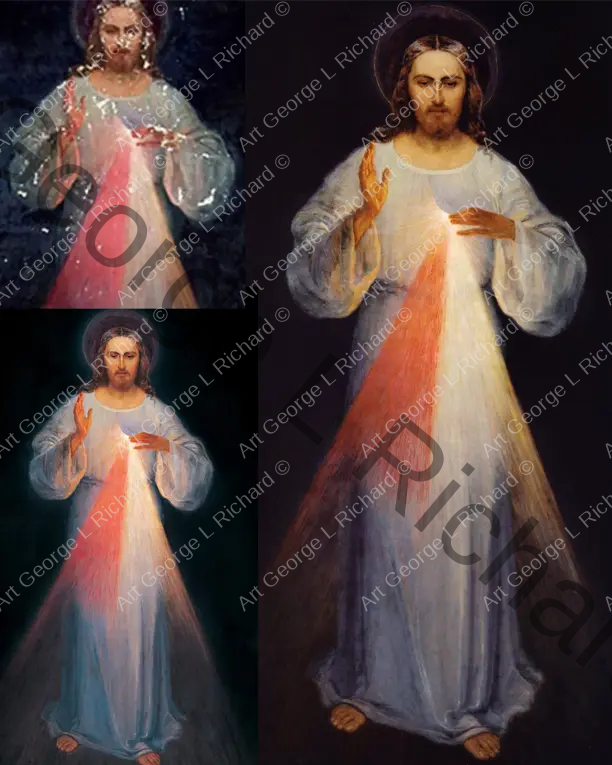
The Vilnius Divine Mercy Image
by the artist Eugeniusz Kazimirowski in Vilnius, Lithuania
Saint Faustina initially felt very sad and wept a good deal when she saw
the Divine Mercy image that artist Eugeniusz Kazimirowski was painting. She said to the Lord, "Who will paint you as beautiful as you are?" Then she heard these words, "Not in the beauty of the color, nor of the brush lies the greatness of this image, but in My grace." (Diary 313)
In Later she writes, "During Holy Mass, I prayed fervently that Jesus might become the King of all hearts and that the divine grace might shine in every soul. Then I saw Jesus as He is depicted in the image, and He said to me, My daughter, you give Me the greatest glory by faithfully fulfilling My desires.”(Diary 500)
It is said that Eugeniusz Kazimirowski was a freemason and a Judas sympathizer who after painting a portrait of Judas hung himself.
If this is true it is a further testament to the infinite Mercy of God. Jesus allowed this person to be the artist to represent Him, or mis-represent Him, and then even chose to appear to Saint Faustina one time looking like the artist depicted Him.
In his book, Life of Christ, Blessed Fulton Sheen writes, "It is interesting to make a comparison of Peter and Judas. Our Lord warned both that they would fail. They both failed, they both denied or betrayed the Lord and they both repented. But the difference in the word repent is that Judas repented unto himself and Peter repented unto the Lord. They were the same up to that point."
St. Paul therefore says there are two kinds of sorrow, the sorrow of the world and the sorrow of true faith" (2 Cor 7:10)."
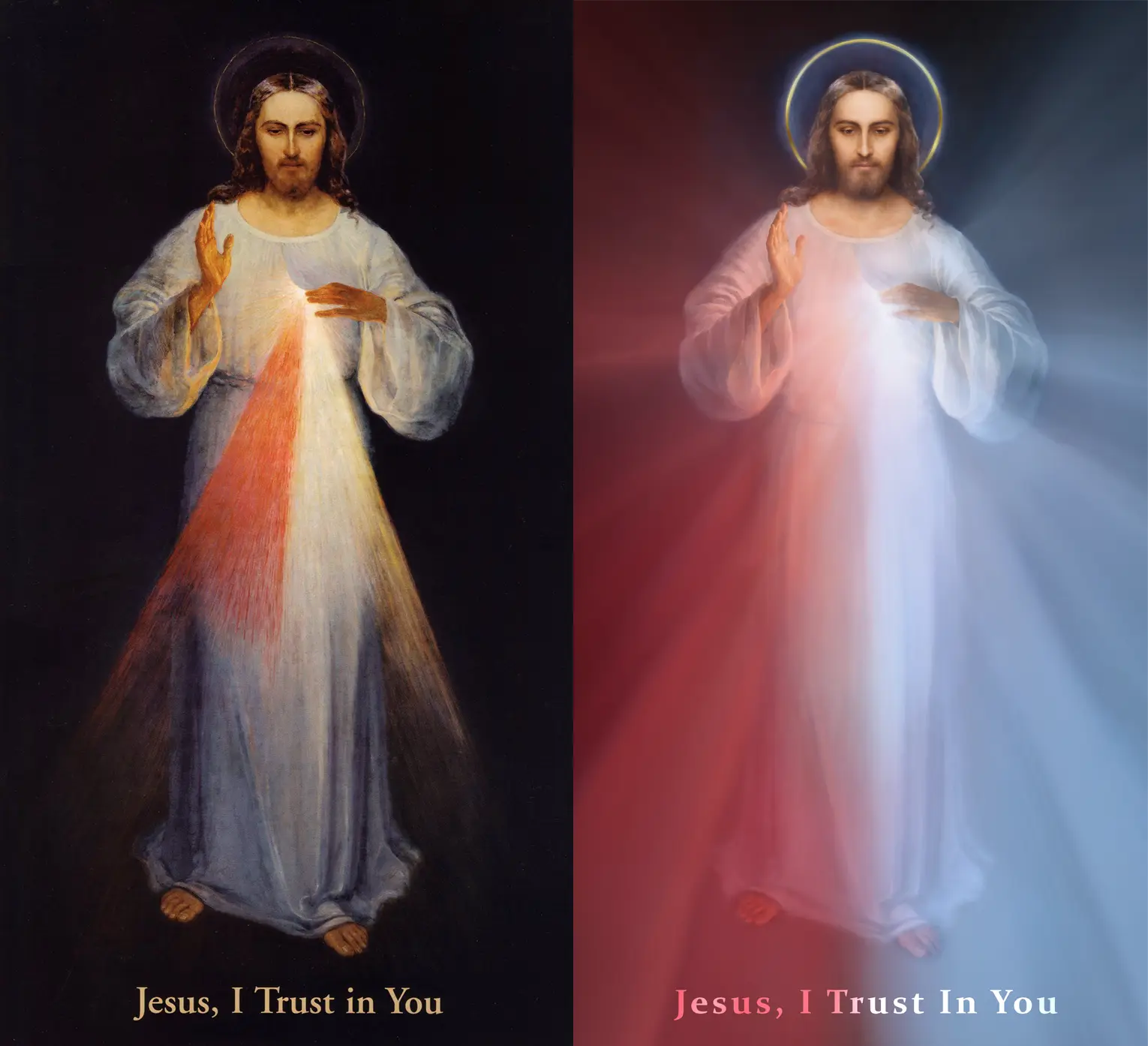
1) lower the waist line to be located where a man's would be2) add transparent rays to better represent the blood and water
The two rays denote Blood and Water.
The pale ray stands for the Water which makes souls righteous. The red ray stands for the Blood which is the life of souls.
"These two rays issued forth from the depths of My tender mercy when My agonized Heart was opened by a lance on the Cross."
"Happy is the one who will dwell in their shelter, for the just hand of God shall not lay hold of him." (Diary 299)
"By means of this image I shall grant many graces to souls. It is to be a reminder of the demands of My mercy, because even the strongest faith is of no avail without works." (Diary 742)
The Hyła Divine Mercy Image in the Kraków-Łagiewniki convent chapel.
Adolf Hyła (1897–1965) was a Polish artist who created the world-famous Image of Merciful Jesus in the Kraków-Łagiewniki convent chapel.
After St. Faustina’s death, Hyła painted the image as a votive offering for surviving WWII. He produced three versions, with the final one (1952) becoming the most venerated. Unlike the original Vilnius image painted by Eugeniusz Kazimirowski under Faustina’s guidance, Hyła’s version shows Jesus looking directly at the viewer with a merciful gaze, separated red and pale rays, and a mountain landscape background (later changed to dark).
Despite criticism from Fr. Sopoćko, the image remained in Łagiewniki and survived the 1959 Vatican restrictions on the devotion. It is now one of the most recognized depictions of Divine Mercy worldwide.
Hyła painted nearly 240 versions of the Merciful Jesus, which are now found in churches across Poland and many countries around the world. A deeply religious Catholic, he is remembered as the “Painter of Divine Mercy.”
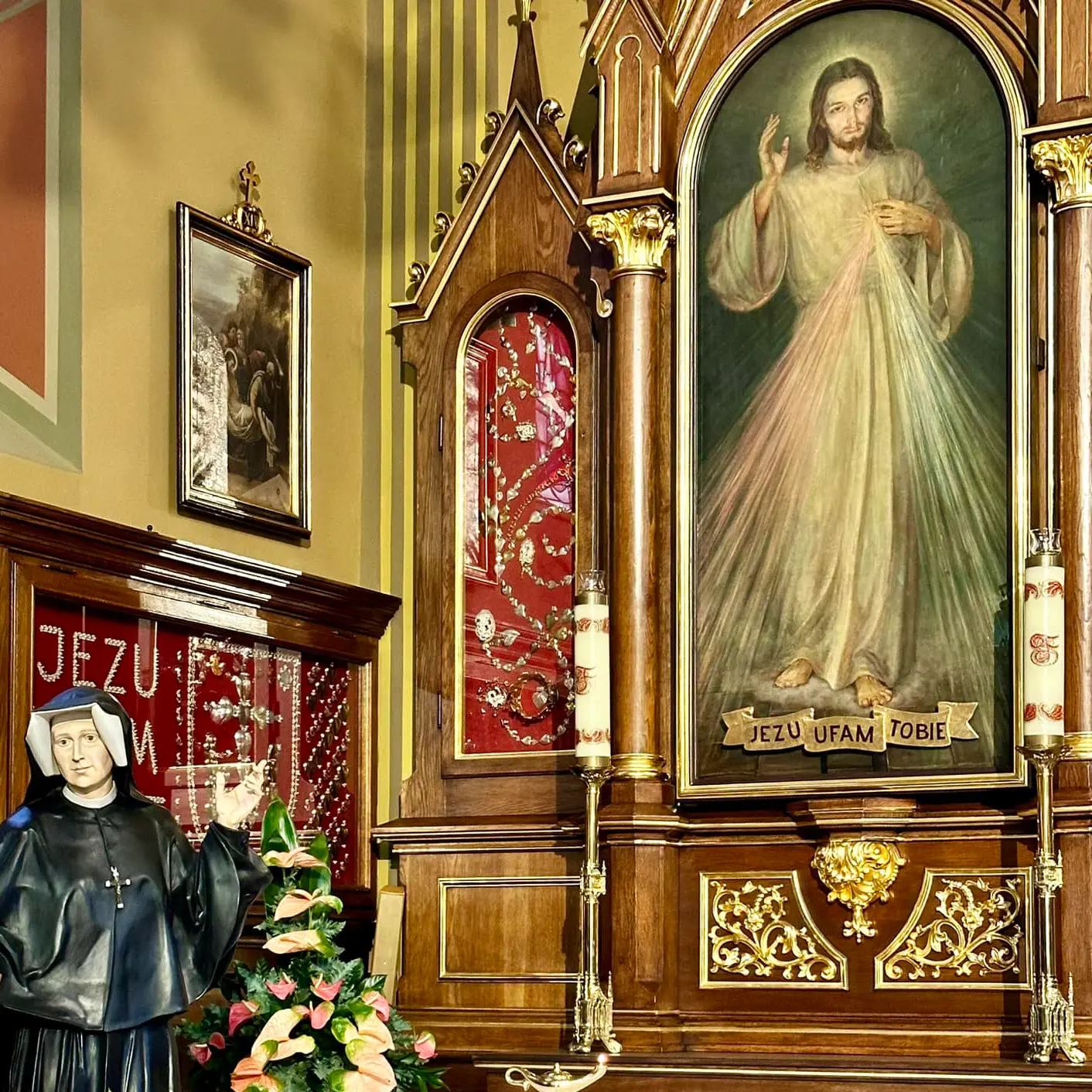
The Completed Images
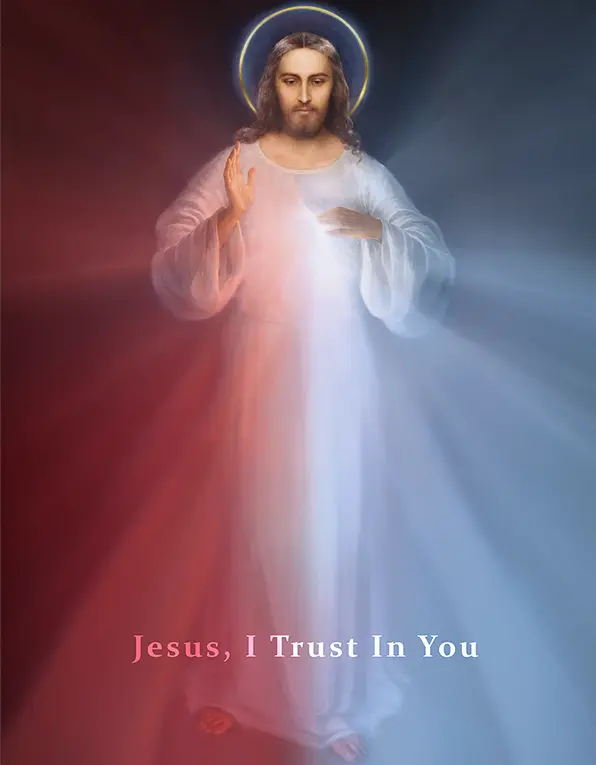

The Following are Gift Items Available with the Divine Mercy Image
Note Cards
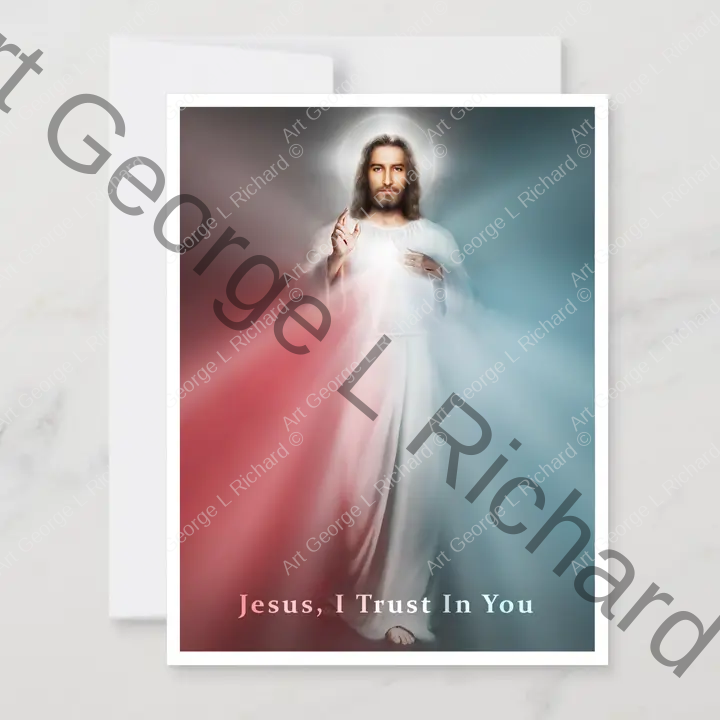
Note Cards
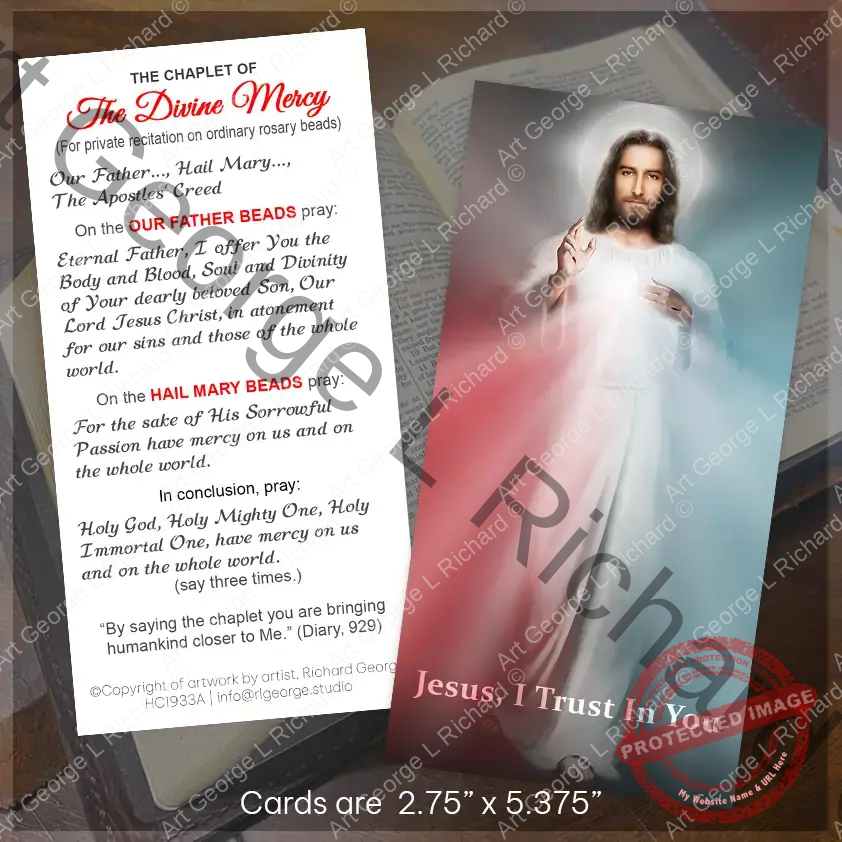
Bookmark Cards
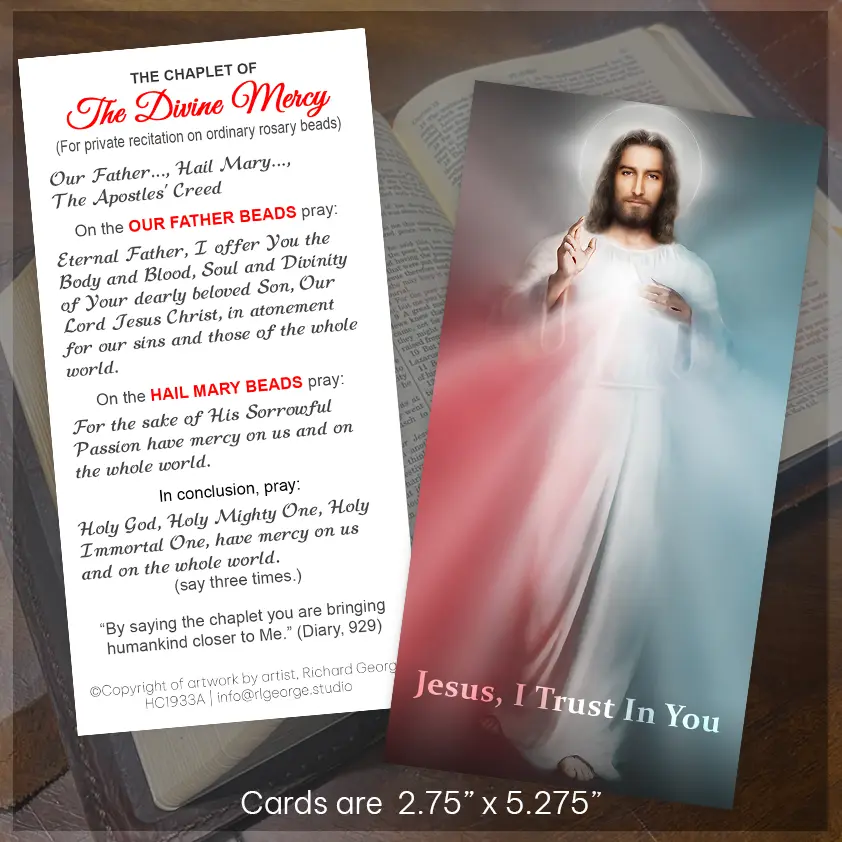
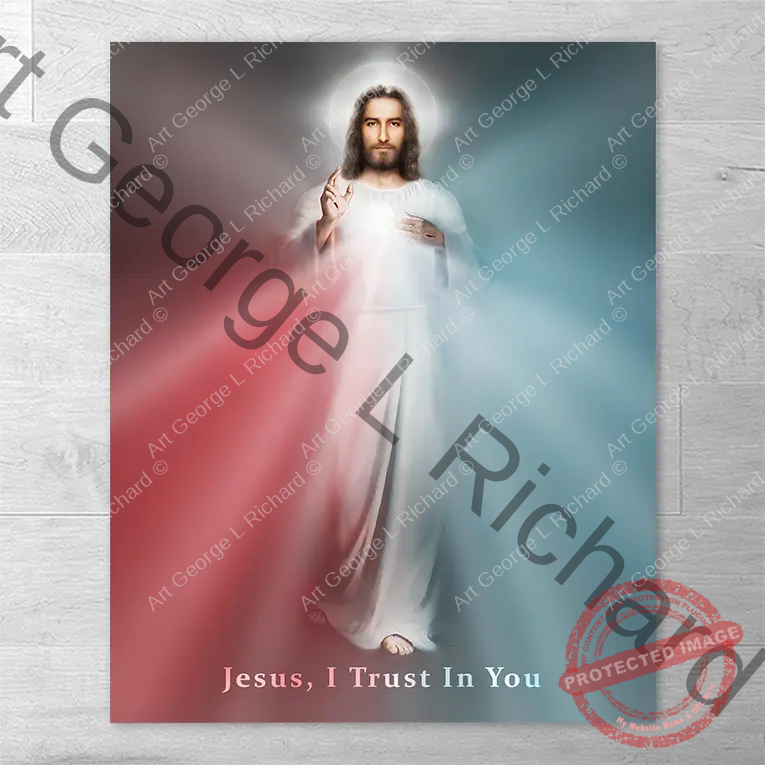
Unframed Art Prints
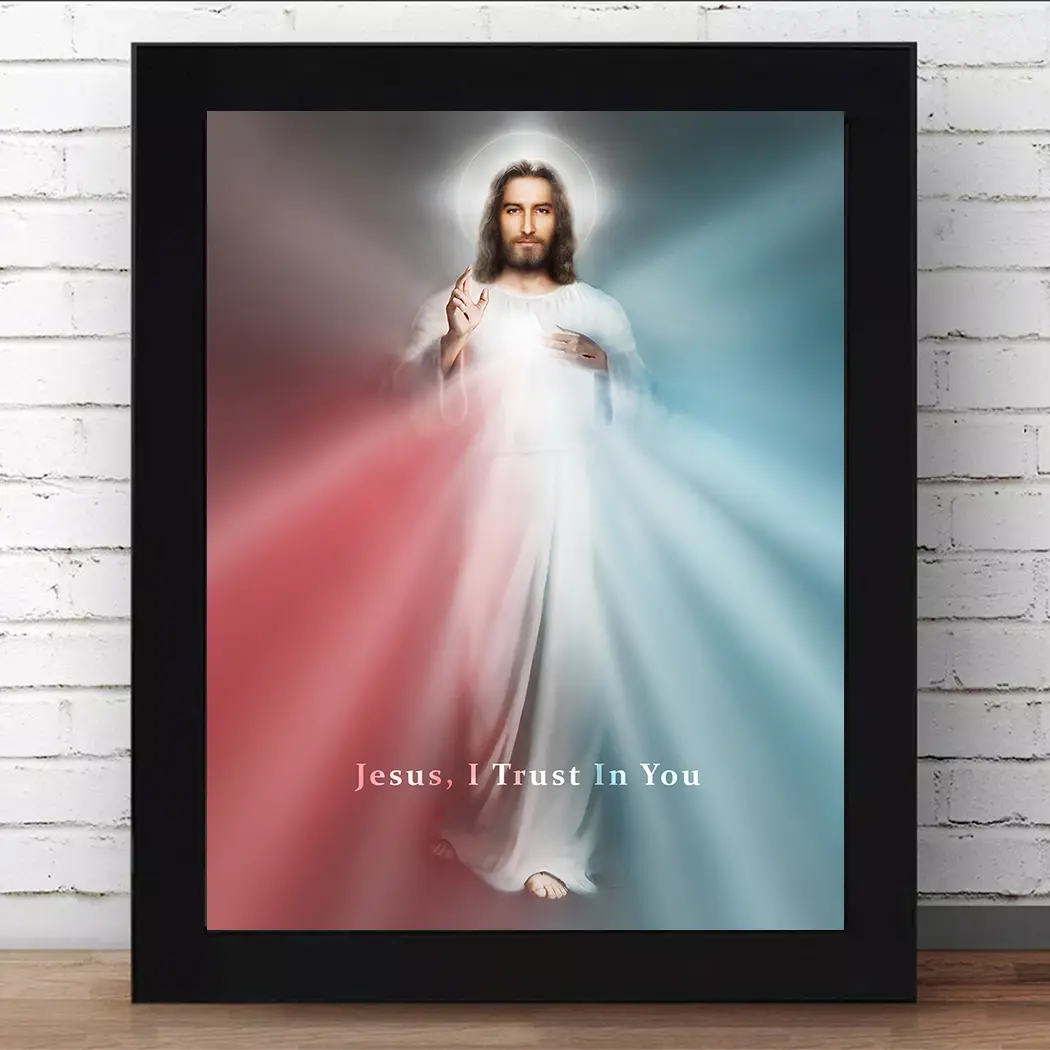
Framed Art Prints
Canvases