




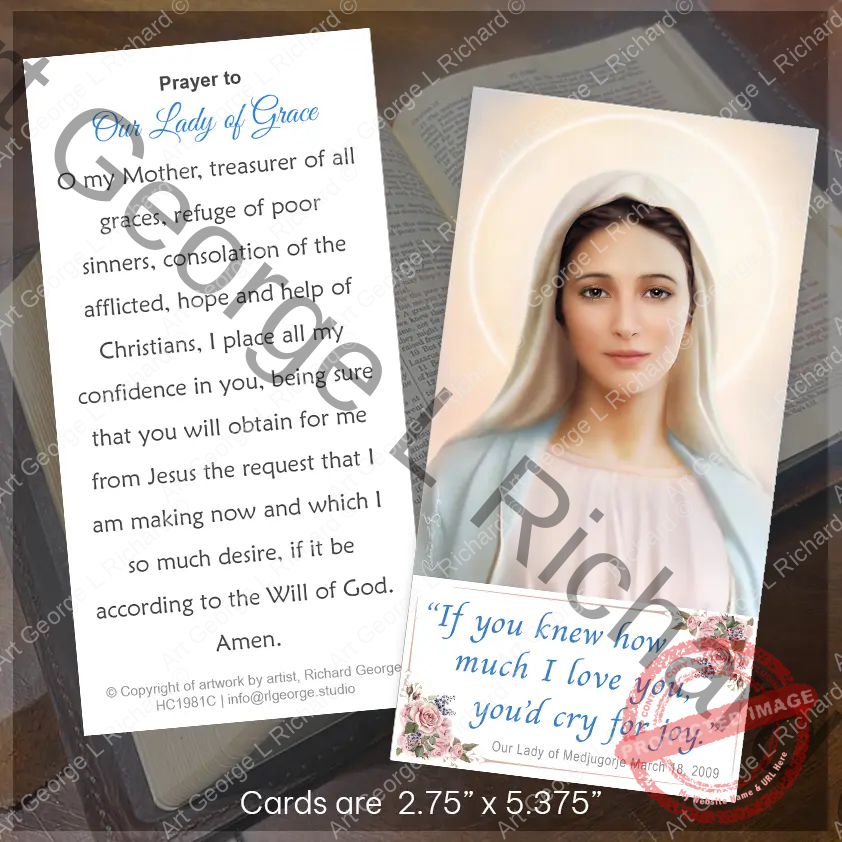
Our Lady of Grace, Our Lady of Medjugorje Note Cards with Envelopes
August 16, 2024
Saint Maximilian Maria Kolbe Prayer Throw
September 26, 2025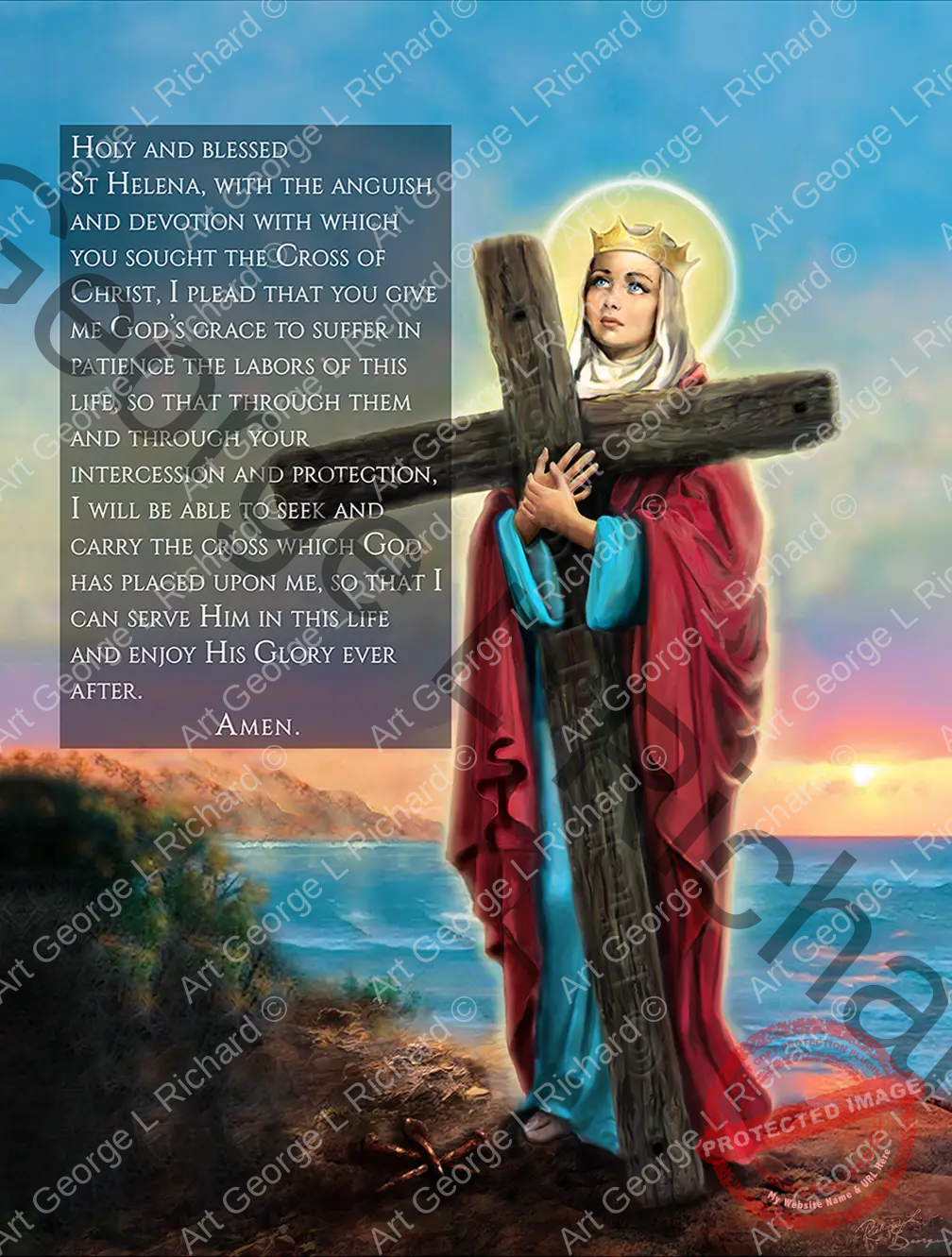
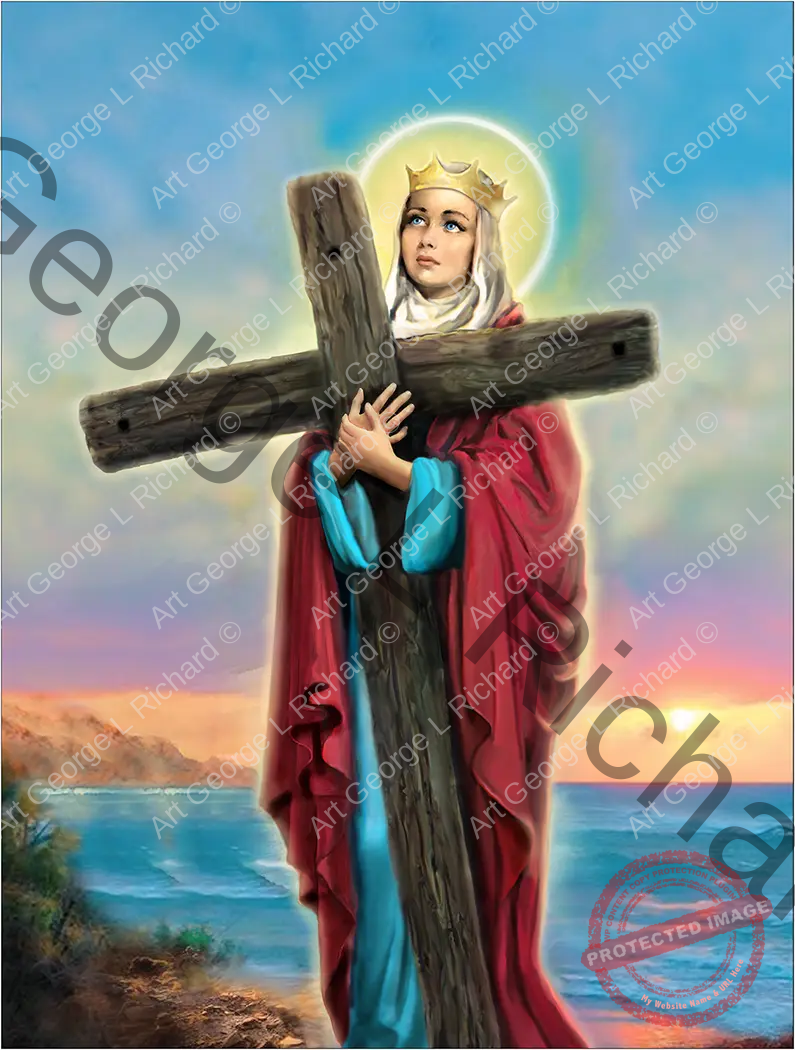
Saint Helena – Finder of the True Cross Prayer Blanket
Price range: $40.00 through $100.00
Painting by artist Richard L George
About this Painting: A dear fellow parishioner, who is bound to a wheel chair because of cerebral palsy, approached me to share a photograph of how The Most Holy Trinity blanket looked as a covering on her bed.
Understanding how much she was suffering I realized she chose that image of the Most Holy Trinity, the Sacrifice of the Holy Mass as a comforting reminder to unite her sufferings with His. What a beautiful witness she is to redemptive suffering!
Continuing the conversation, she asked if she could get two other blankets: one of her namesake, Saint Helena and one of Saint Maximillian Kolbe whose memorial day is the same day that she was born.
She then showed me a couple of prayer cards of the two saints and asked if I could include the prayer on the blankets as well.
I was very blessed by God to be asked such a favor for one that suffers so much for Jesus. And that special Love of God is why I was so very driven to create the artwork and have the blankets made up for her.
Let this Saint Helena Prayer Blanket serve as a frequent reminder to unite one’s sufferings with Christ through the intercession of Saint Helena. Also, besides a bedspread, it makes for a beautiful wall hanging!
“Saint Helena – Finder of the True Cross” Prayer Blanket by artist Richard L George.
- Available in 3 different sizes: small (30’x 40′); medium (50″x 60″); large (60″x 80″)
- Edge-to-edge sublimation printing in vibrant full color
- Sturdy double edge stitching for a clean finish
- Back color is off-white
-
- Care Instructions: Wash separately in Cold Water – Delicate Cycle – Do Not Bleach – Tumble Dry Low – Do Not Iron or Press with Heat – Do Not Dry Clean
More about Saint Helena:
The mother of Constantine the Great, born about the middle of the third century, possibly in Drepanum (later known as Helenopolis) on the Nicomedian Gulf; died about 330. She was of humble parentage; St. Ambrose, in his “Oratio de obitu Theodosii”, referred to her as a stabularia, or inn-keeper. Nevertheless, she became the lawful wife of Constantius Chlorus. Her first and only son, Constantine, was born in Naissus in Upper Moesia, in the year 274. The statement made by English chroniclers of the Middle Ages, according to which Helena was supposed to have been the daughter of a British prince, is entirely without historical foundation. It may arise from the misinterpretation of a term used in the fourth chapter of the panegyric on Constantine’s marriage with Fausta, that Constantine, oriendo (i.e., “by his beginnings,” “from the outset”) had honoured Britain, which was taken as an allusion to his birth, whereas the reference was really to the beginning of his reign.
In the year 292 Constantius, having become co-Regent of the West, gave himself up to considerations of a political nature and forsook Helena in order to marry Theodora, the step-daughter of Emperor Maximinianus Herculius, his patron, and well-wisher. But her son remained faithful and loyal to her. On the death of Constantius Chlorus, in 308, Constantine, who succeeded him, summoned his mother to the imperial court, conferred on her the title of Augusta, ordered that all honour should be paid her as the mother of the sovereign, and had coins struck bearing her effigy. Her son’s influence caused her to embrace Christianity after his victory over Maxentius. This is directly attested by Eusebius (Vita Constantini, III, xlvii): “She (his mother) became under his (Constantine’s) influence such a devout servant of God, that one might believe her to have been from her very childhood a disciple of the Redeemer of mankind”. It is also clear from the declaration of the contemporary historian of the Church that Helena, from the time of her conversion had an earnestly Christian life and by her influence and liberality favoured the wider spread of Christianity. Tradition links her name with the building of Christian churches in the cities of the West, where the imperial court resided, notably at Rome and Trier, and there is no reason for rejecting this tradition, for we know positively through Eusebius that Helena erected churches on the hallowed spots of Palestine. Despite her advanced age she undertook a journey to Palestine when Constantine, through his victory over Licinius, had become sole master of the Roman Empire, subsequently, therefore, to the year 324. It was in Palestine, as we learn from Eusebius (loc. cit., xlii), that she had resolved to bring to God, the King of kings, the homage and tribute of her devotion. She lavished on that land her bounties and good deeds, she “explored it with remarkable discernment”, and “visited it with the care and solicitude of the emperor himself”. Then, when she “had shown dueveneration to the footsteps of the Saviour”, she had two churches erected for the worship of God: one was raised in Bethlehem near the Grotto of the Nativity, the other on the Mount of the Ascension, near Jerusalem. She also embellished the sacred grotto with rich ornaments. This sojourn in Jerusalem proved the starting-point of the legend first recorded by Rufinus as to the discovery of the Cross of Christ.
Her princely munificence was such that, according to Eusebius, she assisted not only individuals but entire communities. The poor and destitute were the special objects of her charity. She visited the churches everywhere with pious zeal and made them rich donations. It was thus that, in fulfilment of the Saviour’s precept, she brought forth abundant fruit in word and deed. If Helena conducted herself in this manner while in the Holy Land, which is indeed testified to by Eusebius, Bishop of Caesarea in Palestine, we should not doubt that she manifested the same piety and benevolence in those other cities of the empire in which she resided after her conversion. Her memory in Rome is chiefly identified with the church of S. Croce in Gerusalemme. On the present location of this church formerly stood the Palatium Sessorianum, and near by were the Thermae Helenianae, which baths derived their name from the empress. Here two inscriptions were found composed in honour of Helena. The Sessorium, which was near the site of the Lateran, probably served as Helena’s residence when she stayed in Rome; so that it is quite possible for a Christian basilica to have been erected on this spot by Constantine, at her suggestion and in honour of the true Cross.
Helena was still living in the year 326, when Constantine ordered the execution of his son Crispus. When, according to Socrates’ account (Church History I.17), the emperor in 327 improved Drepanum, his mother’s native town, and decreed that it should be called Helenopolis, it is probable that the latter returned from Palestine to her son who was then residing in the Orient. Constantine was with her when she died, at the advanced age of eighty years or thereabouts (Eusebius, Life of Constantine III.46). This must have been about the year 330, for the last coins which are known to have been stamped with her name bore this date. Her body was brought to Constantinople and laid to rest in the imperial vault of the church of the Apostles. It is presumed that her remains were transferred in 849 to the Abbey of Hautvillers, in the French Archdiocese of Reims, as recorded by the monk Altmann in his “Translatio”. She was revered as a saint, and the veneration spread, early in the ninth century, even to Western countries. Her feast falls on 18 August. Regarding the finding of the Holy Cross by St. Helena, see CROSS AND CRUCIFIX.
– The Catholic Encyclopedia
| Weight | 10 lbs |
|---|---|
| Dimensions | 12 × 12 × 12 in |
You may also like…
-
Our Lady of Tihaljina (near Medjugorje) Bookmark
Price range: $2.50 through $25.00



Related products
-
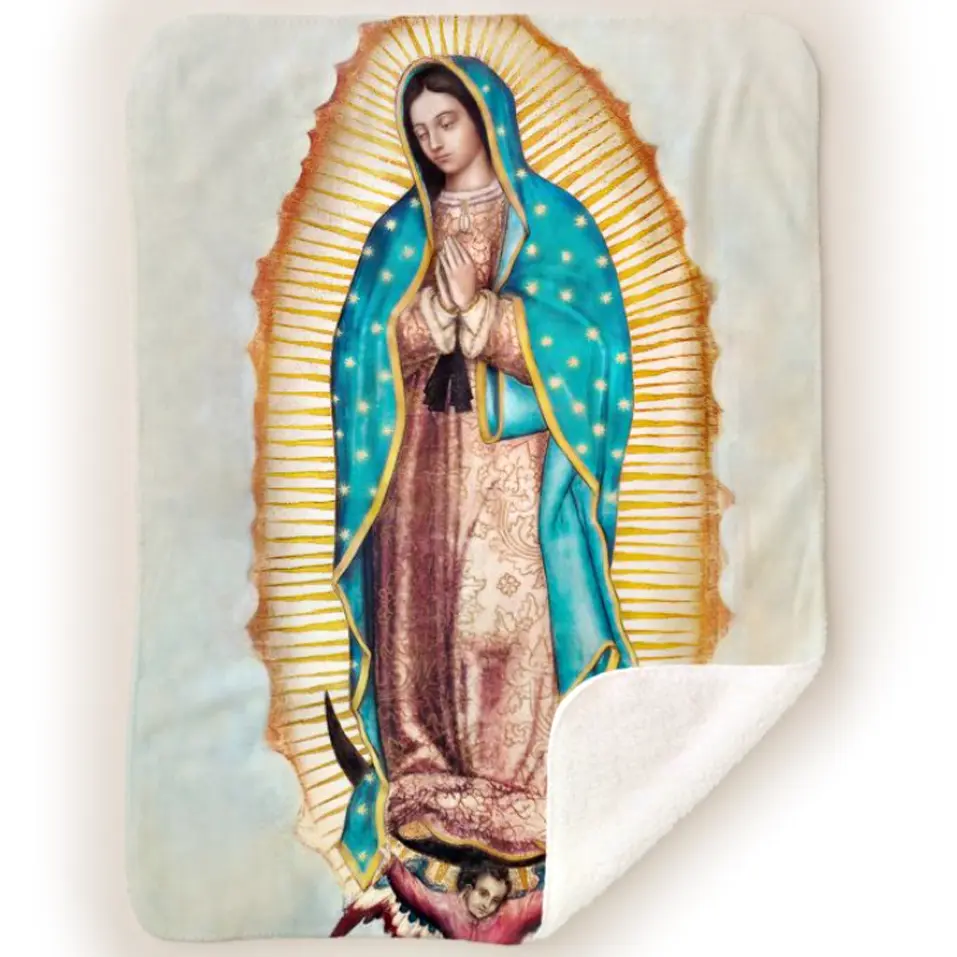
Our Lady of Guadalupe Sherpa Fleece Throw
Price range: $40.00 through $100.00 -
Our Lady of Tihaljina Sherpa Blanket
Price range: $40.00 through $100.00 -
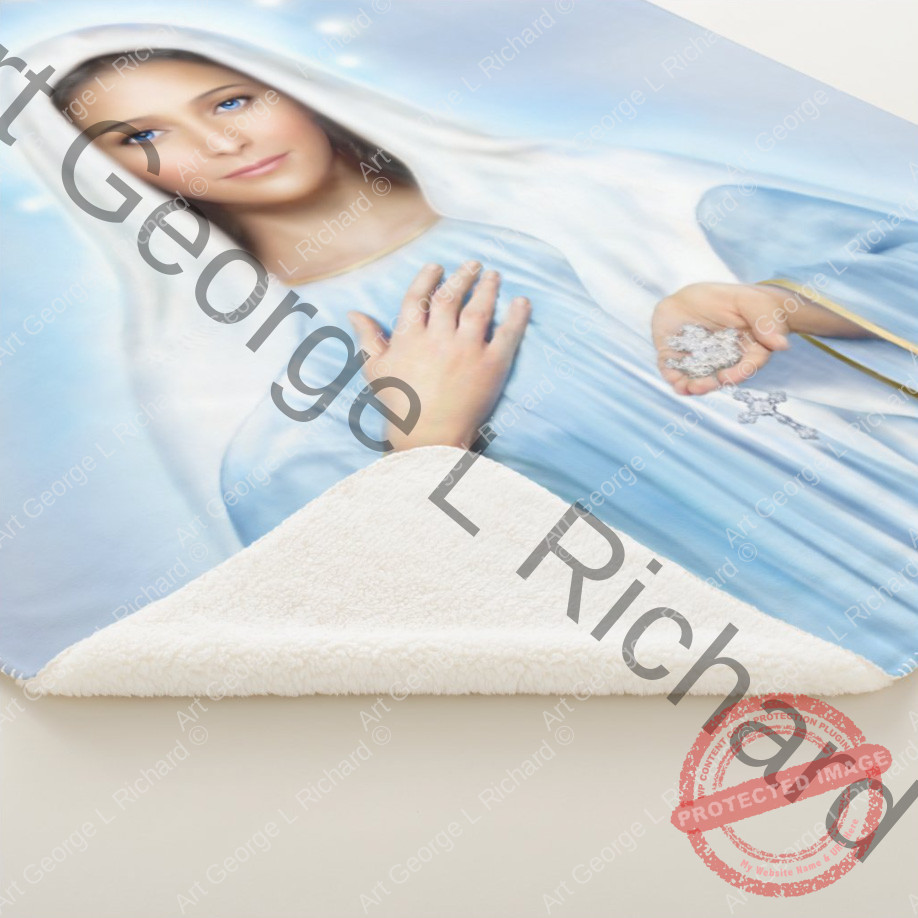
Our Lady of Medjugorje Sherpa Blanket
Price range: $40.00 through $100.00